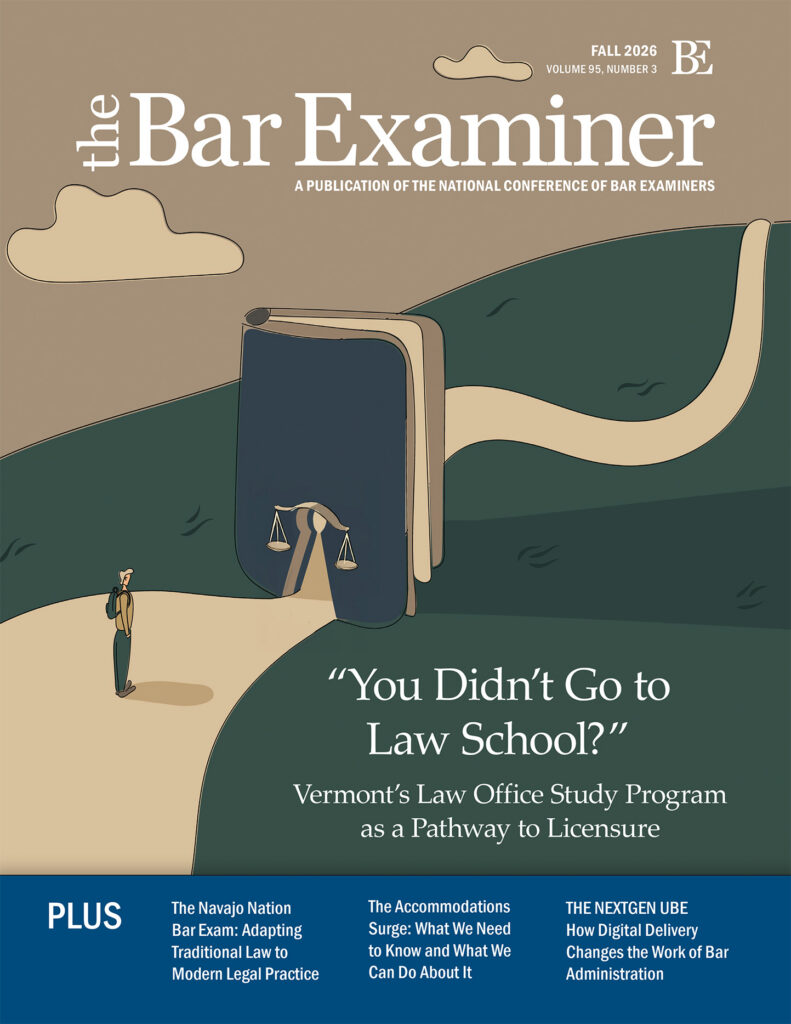
This article originally appeared in The Bar Examiner print edition, Fall 2026 (Vol. 95, No. 3), pp. 41–42. By Hon. Robyn M. Brody
When I attended my first NCBE Annual Bar Admissions Conference (ABAC) in Philadelphia in 2018, I expected to learn more about the mechanics of bar admissions. What I did not expect was to engage with complex conversations concerning high-stakes testing, psychometrics, and the purpose of the bar examination itself.
Not long after that conference, NCBE began conducting focus groups around the country as part of its effort to reexamine the bar exam. As a justice from a Uniform Bar Examination jurisdiction, I was invited to participate in a January 2019 focus group in San Antonio with representatives from other UBE jurisdictions. Lawyers, judges, and bar administrators engaged in thoughtful, forward-looking conversations as they examined the existing exam structure and discussed what should be prioritized in the future.
Those listening sessions, followed by NCBE’s practice analysis survey of nearly 15,000 attorneys, gave me confidence that the organization was building a solid foundation for the NextGen UBE. The process was deliberate and data driven. Rather than beginning with predetermined conclusions, NCBE sought input from the profession and then used that information to develop the content scope outlines and practical skills assessments that ultimately became the new exam’s cornerstone.
As I reflect on the multiyear development process, what stands out most to me is NCBE’s commitment to stakeholder engagement and communication. At every significant stage over the last eight years, NCBE brought together bar admissions professionals, practitioners, legal educators, and judges and justices to share information, exchange ideas, and provide feedback.
One of the most valuable opportunities was the chance to preview sample materials and hear directly from the law professors involved in developing the new exam. Integrated question sets, a new format, require examinees to perform the same types of analytical tasks lawyers confront every day. It was equally encouraging to hear legal educators at ABAC 2024 in Nashville discuss how law school curricula would need to evolve to incorporate more practical materials and skills-based instruction, even in traditional doctrinal classes such as Contracts and Torts. For justices of jurisdictions’ highest courts, charged with overseeing attorney licensure and protecting the public, the prospect of producing more practice-ready attorneys is welcome news.
Throughout NextGen development, NCBE remained open to jurisdictions’ feedback. Justices voiced significant concerns when family law was not included among the exam’s standalone multiple-choice questions. NCBE listened. The decision to incorporate this area of law beginning in 2028 demonstrated the organization’s willingness to engage with constructive criticism. I also appreciated NCBE’s starting the Justices’ Roundtable, a forum that has provided invaluable information and feedback during the later stages of NextGen development.
The NextGen adoption decision was not particularly difficult or controversial in Idaho. The legal profession has changed dramatically over the last several decades, and many of the changes embodied in the NextGen UBE were long overdue. Like many smaller jurisdictions, Idaho simply does not possess the resources necessary to independently develop and administer a comprehensive, fair, and psychometrically sound licensing examination. NCBE’s work provides jurisdictions like ours with a reliable and professionally developed assessment of minimum competence.
We believed that meaningful participation by all interested stakeholders was essential to this process. To that end, the Idaho State Bar convened a task force that included bar admissions professionals, judges, law school faculty, and attorneys with extensive experience drafting and grading bar examination questions. In many ways, we followed the same approach NCBE had modeled during the exam development process.
The most challenging aspects of implementation were not necessarily philosophical but more practical. We needed to determine the appropriate timing for adoption, identify necessary rule changes, educate Idaho lawyers regarding the new exam, and ultimately secure approval for such changes.
Once the task force recommended adoption, members gave presentations throughout the state, speaking at local bar association meetings and Inn of Court programs. This outreach consistently generated productive discussions, particularly when attorneys had the opportunity to review sample NextGen questions.
As the inaugural July 2026 administration approached, additional implementation decisions remained. That spring, the Idaho State Bar Commission and the Idaho Supreme Court collaborated to establish Idaho’s NextGen passing score. We relied heavily on NCBE’s score-mapping information and considered the approaches of our neighboring jurisdictions. Ultimately, we concluded that a lower passing score was appropriate for the NextGen UBE than had been required for the legacy exam. The timing of our passing-score announcement also caused us to address the legacy passing score for the February 2026 administration while those scores were pending. That experience underscored an important reality for UBE jurisdictions: regardless of when NextGen adoption occurs, there will be a lengthy transition period during which admissions rules must consider the existence of two different exams.
Thinking about the journey that started in Philadelphia in 2018, the largely successful rollout of the NextGen UBE did not happen by accident. It was the product of extensive research, meaningful stakeholder engagement, thoughtful planning, and continuous communication. Here in Idaho, the NextGen transition was remarkably smooth. The challenges in Washington, Missouri, and Maryland were enormously disappointing for everyone involved, but I have no doubt that the lessons learned will drive an even better testing process in the future. I am excited to analyze the results this fall and cannot wait to read test takers’ feedback.
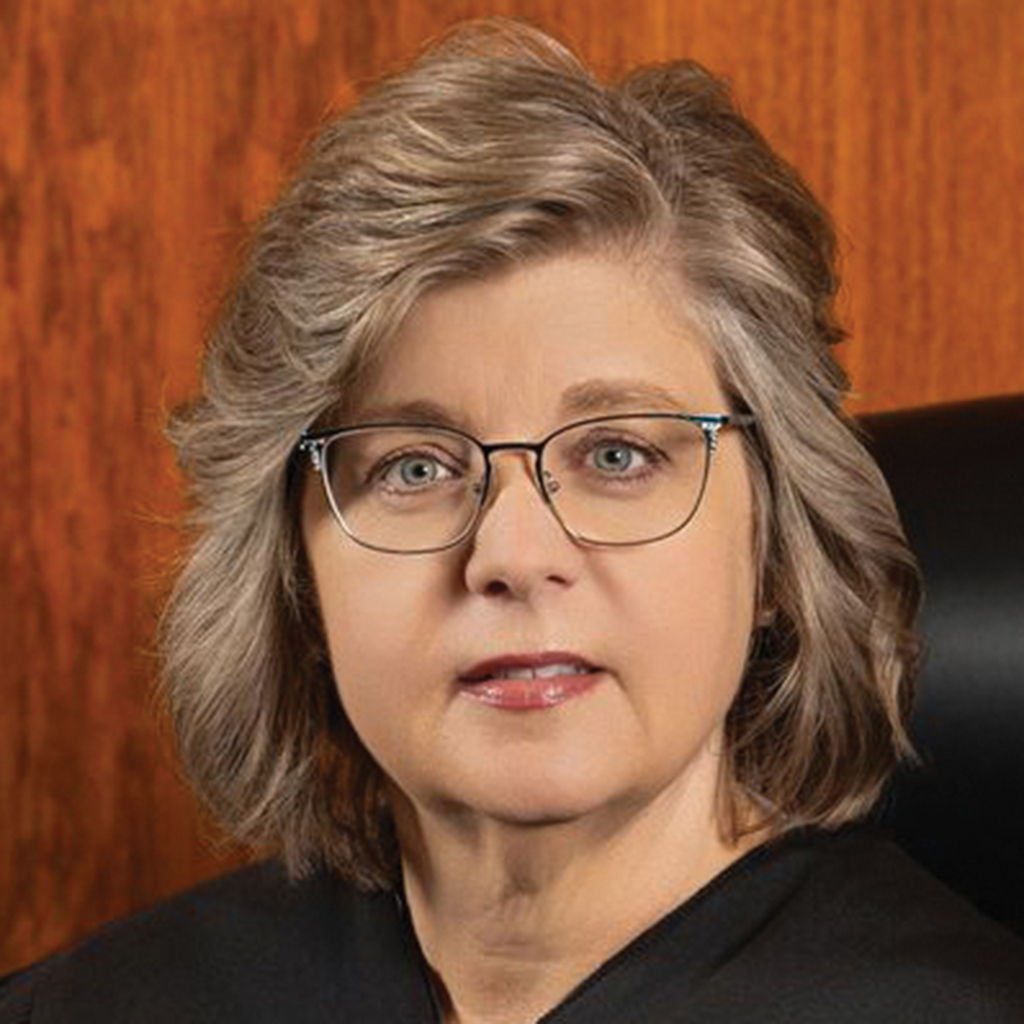 Hon. Robyn M. Brody is Chief Justice of the Idaho Supreme Court, where she has served since January 2017.
Contact us to request a pdf file of the original article as it appeared in the print edition.